

Retail is seeing declining footfall, fragmented purchase journeys, and an urgent push to increase share of wallet. At the same time, brands like Toys “R” Us and Topshop are re-entering the High Street, a sign that physical retail isn’t finished but is being redefined.
In transport, the same challenge appears as lost passengers, underused routes, and the ongoing effort to persuade people to switch from cars to buses, trains, or bike-share schemes. When retail succeeds in drawing people back into town centres, transport benefits too.
But both sectors are wrestling with the same question: where are our customers actually going, and what would make them choose us instead?
We’ve spent years trying to explain behaviour using surveys, averages, and historic models. I’ve tried dozens of variations of this myself. Optimised dashboards until my eyes bled.
The answer, as always, starts with the consumer. People switch stores, services, and modes based on what fits their day, not what aligns with a planned journey.
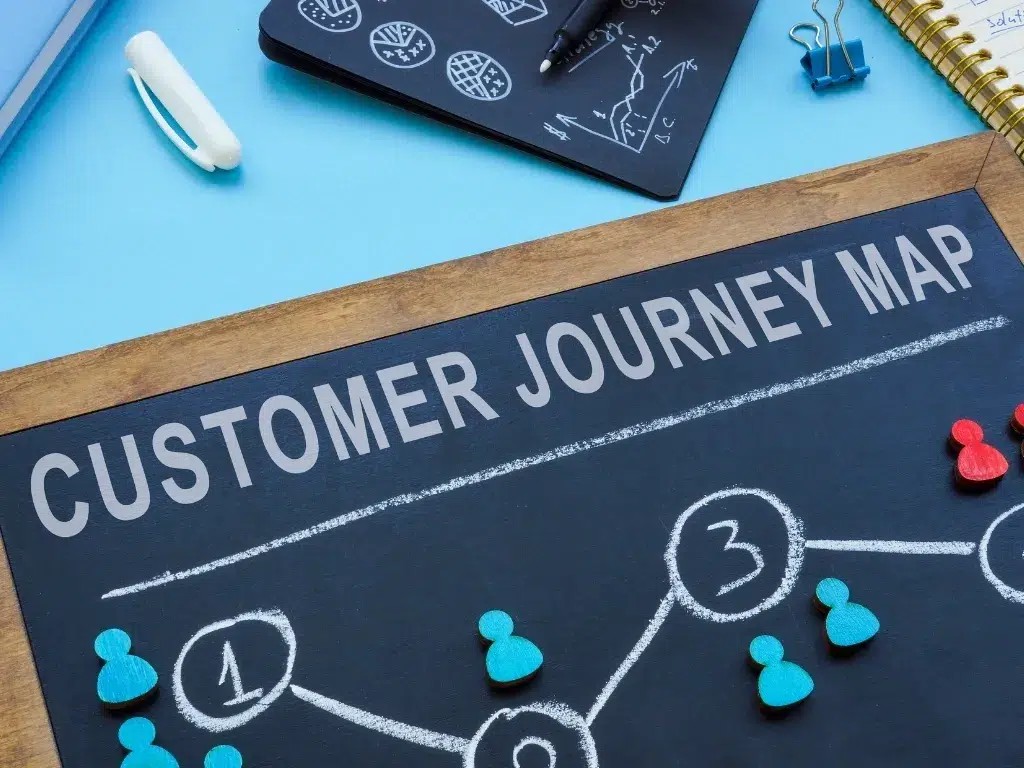
Why traditional customer understanding breaks down
I’ve spent considerable time working with mountains of customer data, and you still can’t answer basic questions about behaviour change.
The problem is that most customer understanding is built on three outdated assumptions:
Assumption 1: Customers behave predictably within defined segments
Retail teams segment by demographics, purchase history, and loyalty tiers. Transport operators plan around peak and off-peak demand. Both approaches assume stability.
But hybrid working has destroyed traditional commuting behaviour. Economic uncertainty has made discretionary spending unpredictable. The idea that “Friday shoppers” or “morning commuters” behave consistently has become less reliable with each passing quarter.
Assumption 2: Past behaviour reliably predicts future behaviour
Planning cycles are still anchored to last year’s data. Retail merchandising decisions for autumn are made in spring based on the previous autumn’s performance. Transport timetables are adjusted annually using historical ridership figures.
Meanwhile, customer preferences are changing week by week. By the time the annual plan is implemented, the opportunity has moved.
Assumption 3: Surveys and stated preferences reveal true intent
When asked, customers say they’ll visit stores more often or take public transport if service improves. In practice, stated intent and actual behaviour diverge significantly.
What people say they’ll do and what they actually do when faced with real choices are often completely different things.
This problem (the gap between what people say and what they do) is where traditional analysis stalls. AI solves this by moving beyond stated intent. It gives you the real-time, objective view of customer behaviour you need to take effective action.

AI’s operational value: Real-time journey and demand detection
Here’s where AI starts delivering operational value.
1: Real-time journey reconstruction
AI platforms can now stitch together fragmented customer behaviours across channels, locations, and time periods to reconstruct actual journeys rather than isolated events.
For the retail example above, AI would identify that the online browse, store visit, and mobile purchase are likely the same customer based on behavioural characteristics, device signatures, and timing clusters. The customer moves from “low-engagement” to “high-consideration purchaser”, which fundamentally alters how the retailer should engage that customer.
Similarly, in transport, AI can identify which alternative modes passengers are using when they don’t choose your service. If people are driving the first leg to avoid a poorly timed connection, that’s a scheduling problem.
2: Demand change detection before it hits revenue
Traditional performance tracking is retrospective. You know footfall dropped, or ridership declined, after it’s already happened.
AI enables forward-looking demand detection by analysing behavioural indicators that precede purchase or travel decisions.
Online search activity in specific areas can reveal increased interest before it appears in sales data. If browsing time increases but conversion drops in a postcode area, customers are looking but not finding what they need locally.
A retailer using AI can spot this three weeks before it appears in sales data and test interventions: local inventory adjustments, targeted promotions, or store associate training.
Similarly, transport operators can identify emerging demand from searches, incomplete journey planning, and failed booking attempts. If users repeatedly search for a route that doesn’t exist in your network, that’s an early warning to test service adjustments before passengers give up entirely.
The change here is from “we lost customers” to “we’re detecting early warnings that customers are considering alternatives.”
Understanding why customers switch modes and brands
Here’s where it gets more interesting.
AI is increasingly capable of analysing behavioural context around movement decisions, such as what information did they seek before making a choice, what alternatives they considered, and what friction points caused them to abandon or switch?
The “near miss” opportunity
Transport operators can analyse incomplete journey planning sessions. Customers search for a route, review options, and then abandon without booking.
Traditional analytics would label this “low intent” or “price sensitivity.” AI can dig deeper and identify distinct behavioural clusters:
- Timing mismatch: Desired arrival time doesn’t align with the service schedule. Too late for their commitment.
- Complexity aversion: Journey requires multiple connections with tight transfer windows. Perceived as too risky.
- Mode preference difference: Customer wants to combine modes (cycling + public transport), but the infrastructure doesn’t support it.
These insights are based on actual search strings, dwell time on specific journey options, and clickstream analysis.
You can’t fix what you can’t diagnose. AI makes the diagnosis possible at scale.
Rethinking service design: Moving from fairness to equity with AI
Traditional retail performance metrics look at sales per square foot, footfall, and transaction value. Certain areas may underperform on all three.
The initial response? Reduce investment, shrink inventory, or close locations.
AI analysis can add behavioural context. Customers in those areas might have:
- Significantly higher online research time before purchase
- More frequent returns due to fit issues
- Lower access to private transport for travelling to alternative locations
An equity-driven approach would test different service models in those locations rather than reducing investment based on generic performance metrics.
In transport, equity thinking means asking: are we running services where people can already travel easily, or where access is genuinely limited?
If your bus route duplicates a corridor that’s already well-served by metro, cycling infrastructure, and ride-hailing, you’re competing on convenience, not access. But if your route is the only viable option for people in outer suburbs to reach employment centres, that’s an access equity question.
AI can help identify where reallocation creates the biggest access impact, not just the best operating margin.
Leading retailers are already demonstrating this approach. According to Gartner, Majid Al Futtaim’s Lifestyle division in Dubai uses data analytics and machine learning to focus on their most valuable customers: the top 2% of shoppers generate 27% of total revenue, supported by personalised gifting, curated events, and tailored campaigns. Meanwhile, their advanced forecasting tools have driven a 25% reduction in inventory alongside a 12% increase in revenue.

The implementation reality check
I’m sure you’ll be aware that none of this happens overnight, and implementation is where most initiatives stall.
I find this hard to do, but it’s worth being direct: AI-driven customer journey insight is useless if your organisation can’t act on it.
Here’s what separates organisations that deploy AI effectively from those that buy platforms and see no change:
Reality check 1: Decision-making speed
The value of real-time behavioural data is that it creates opportunities for early intervention. That only works if you can move quickly. Leading operators establish pre-agreed thresholds and delegated authority. When AI flags a demand change above a defined confidence level, operational teams have authority to test responses without escalation.
Reality check 2: Cross-functional coordination
Customer journeys cross departmental boundaries. AI will reveal insights that require marketing, operations, merchandising, and customer service to coordinate. But if those teams operate in silos, nothing changes. The organisations making progress have created small, cross-functional response teams with authority to act on AI-driven insight.
Reality check 3: Tolerance for testing
If your organisation treats every failed pilot as a catastrophe, you’ll default to safe, incremental changes that AI could have suggested anyway. Essentially, the mindset change is from “prove it will work before we try” to “test quickly, learn fast, and scale what works.”

5 Priorities for leaders in 2026 (strategy & investment)
When we advise leaders on customer strategy, operational planning, or technology investment in 2026, here’s what we suggest is worth focusing on:
- Stop optimising for average customers. Averages hide the behavioural clusters that actually drive outcomes. AI makes it possible to identify and serve distinct customer groups without manual segmentation.
- Prioritise early detection over reactive response. The organisations pulling ahead are spotting demand changes and behavioural developments weeks before they appear in revenue or ridership data.
- Question the fairness vs equity trade-off. Distributing resources evenly feels safe, but it often misallocates effort. Focus on where intervention creates the most access or value, not where it’s easiest to deploy.
- Reduce the time between insight and action. AI insight is only valuable if you can act on it while the opportunity is still live. Organisational agility is as important as analytical sophistication.
- Invest in journey reconstruction, not just event tracking. Isolated touchpoints don’t reveal intent or behaviour. Connecting the dots across channels and time creates the visibility needed to improve outcomes.
Final thought
The difference between organisations that thrive and those that struggle in 2026 will be those who use behavioural insight to act sooner, allocate resources more strategically, and design services around how customers actually move, rather than how we assume they should.
That’s the move from footfall tracking to fair equity. And it’s already underway.
How Mind The AI Gap can help
The next era of retail and transport will be shaped by those who can find and deploy the right AI solutions quickly, without getting lost in vendor promises or stalled in endless pilots.
At Mind The AI Gap, we’re a marketplace and matchmaking service that connects retail and transport organisations with proven AI creators and solution providers. We bridge the gap between aspiration and execution.
Our approach is different: We start by understanding how your operation actually runs, including your customer journeys, your operational constraints, your data reality. Then we match you with AI solutions and partners that fit your specific challenges, not generic capabilities.
We help retail and transport organisations:
- Find the right AI solutions faster by cutting through vendor noise and connecting you with proven providers whose technology actually addresses your operational challenges
- Avoid costly mismatches between AI capabilities and real operational needs by understanding your customer journey requirements before recommending solutions
- Accelerate from pilot to production by connecting you with partners who understand retail and transport operations, not just technology
- Navigate the AI landscape with confidence, whether you’re exploring customer journey reconstruction, predictive demand detection, or behavioural insight capabilities
- Access our network of AI providers specialising in journey analytics, demand forecasting, customer intelligence, and operational optimisation
- Move from evaluation to implementation with partners who’ve delivered results in retail and transport environments
Our matchmaking service works because we understand both sides: the operational reality of running retail and transport services, and the capabilities of AI solutions that can actually make a difference.
Ready to find AI solutions that match your operational reality?
Contact us: info@mindtheaigap.com | Call us free: 0800 009 6408