

Bus franchising is now in operation in parts of the UK. Greater Manchester has already moved to the model, with Liverpool City Region and the West Midlands preparing to follow.
For operators, this changes the job. Under deregulation, they designed routes, set fares and ran services commercially. Under franchising, authorities design the network and operators bid to run it. Once contracts start, performance is monitored closely, and operational mistakes carry contractual consequences.
Manchester has already shown how different this environment feels. Operators now have to work out how to run successfully within it.
Better operational visibility is part of the answer. Franchised networks generate large volumes of data across routes, vehicles and performance. AI can help operators use that information earlier and more effectively, supporting stronger bids, tighter compliance and more reliable operations.
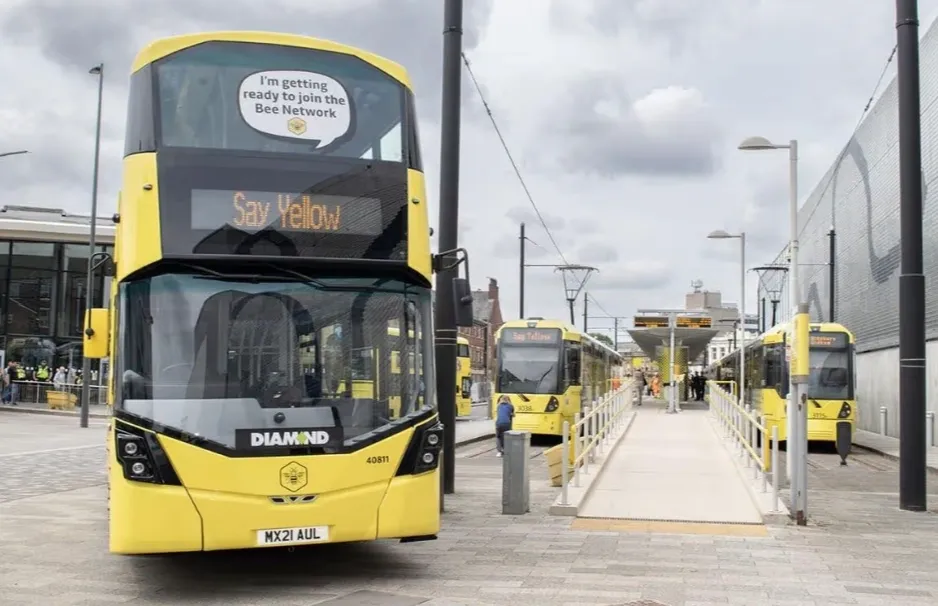
Manchester shows what franchising looks like in practice
Before franchising, buses in Greater Manchester were run commercially by several operators including Arriva North West, First Greater Manchester, Stagecoach Manchester and Go North West. Each company decided its own routes, fares and timetables. Networks overlapped in some areas and disappeared entirely in others.
Franchising reorganised that system through three contract phases between September 2023 and January 2025.
Transport for Greater Manchester (TfGM) now designs the network. It sets the fares, determines service levels and specifies vehicle standards. Operators compete for contracts to run services according to that specification.
You can see the difference immediately when you look at the operator mix.
Go North West and Diamond Bus now appear across all three contract phases. Stagecoach still runs services, although through franchise agreements rather than commercial operation. First Greater Manchester holds fewer routes than before. Arriva withdrew from the region entirely. Metroline entered the market through the final tranche.
Meanwhile, TfGM took on responsibilities that previously sat with operators. Fare revenue flows to the authority. Punctuality data is published weekly. Network information, ticketing and branding now sit under the Bee Network.
Early results have been encouraging. Passenger journeys across the region increased by 14% year on year, while around 84% of residents now live within a five-minute walk of a half-hourly service, according to reporting from Bus-News. Additionally, punctuality improved compared with the previous baseline, and a larger share of the fleet now meets newer environmental standards.
But looking into how the system runs day to day, operators are now working inside a contract environment with defined performance expectations, detailed reporting and far less room for operational error.
Why franchising raises the operational bar for operators
Under the previous system, operators managed their own commercial risk. If a route performed poorly, the consequences were mostly internal. Revenue fell, passengers complained, and adjustments followed. There was no external body monitoring service delivery in real time or attaching formal deductions to missed performance targets.
Franchising is very different.
Service levels are set out in the contract. Scheduled kilometres must be delivered. Punctuality is measured and published. Missed trips, late services, or weak reporting can trigger financial consequences. Performance data is no longer something operators review privately. Authorities and passengers can see it too.
You can see the problem here. Many operational practices in the sector were built for a commercial model with far more flexibility.
Fleet reliability provides a good example. Under franchising, a vehicle failure creates a measurable gap between the service specified in the contract and the service delivered on the road.
Driver availability creates another risk. Large-scale staff transfers, new routes and unfamiliar depots all introduce operational stress in the early stages of a franchise contract.
Meanwhile, bidding has become more complex. Operators must model costs they previously controlled directly, including driver hours, depot efficiency, vehicle procurement and energy prices. Many of these calculations still rely heavily on spreadsheets and manual assumptions.
As a result, the margin for weak data, slow reporting, or poor operational visibility is much smaller than it used to be. This is where better analytics and AI become incredibly useful.
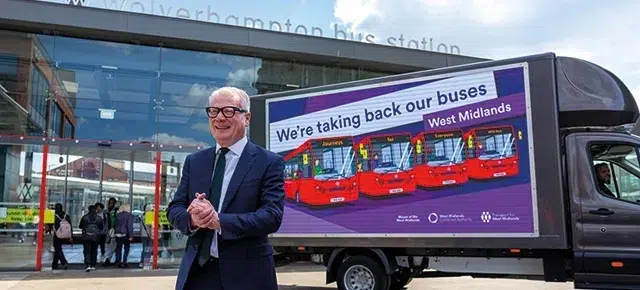
Liverpool and the West Midlands face their own delivery challenges
Manchester offers a useful reference point, but the next regions moving into franchising will face their own operational tests.
Liverpool City Region has accelerated its timetable, aiming to introduce the first franchised services in 2026 and complete the transition by 2027. This means large parts of the network will change within a relatively short period.
In fact, fleet investment is already underway. More than one hundred electric double-deck buses have been ordered for the first tranche, alongside depot upgrades and wider infrastructure work. That scale of procurement creates its own delivery risk, particularly when new vehicle technology is involved.
The region has already experienced this once. A fleet of hydrogen buses purchased ahead of franchising struggled with fuel supply issues and spent long periods out of service before plans were made to convert them to battery electric power.
The West Midlands faces a different set of pressures.
The network is larger and the infrastructure requirements are substantial. Expanding depot capacity and funding a zero-emission fleet will require hundreds of millions of pounds in investment. At the same time, authorities must build the operational capability needed to manage contracts, monitor performance and oversee day-to-day service delivery.
Authorities are moving from strategic transport planning into the business of managing live bus networks. That requires new analytical capability, new systems and people who understand how franchised operations actually run.
With several regions moving in this direction at once, competition for that experience is already increasing.

Where AI can help before contracts are won
So, where does AI actually help?
One of the clearest areas is franchise bidding.
Preparing a bid for a franchise package is a long and data-heavy exercise. Operators must estimate costs they previously controlled themselves, often across routes they have never run before.
Much of this work still relies on manual modelling. Bid teams often build cost models in spreadsheets, adjusting assumptions around:
- driver hours
- depot location
- dead mileage
- fuel or electricity costs
- vehicle financing
Small changes in those assumptions can move the final price significantly.
AI tools can help run many more scenarios in a fraction of the time. Instead of testing a handful of assumptions, operators can model hundreds of cost combinations and see where the bid remains competitive without eroding margin.
Demand forecasting is another example.
Passenger numbers are influenced by demographics, employment patterns, seasonality and comparable route performance. AI models trained on historic ridership data can generate faster demand estimates than manual modelling alone.
There is also a practical workload benefit.
Bid teams spend large amounts of time assembling supporting documentation, compliance evidence and social value material. AI can help produce early drafts from existing company data and previous submissions, allowing experienced bid writers to focus on the parts that require judgement.
In short, AI can help operators build stronger bids, reduce preparation time and avoid expensive modelling errors before submission.
Where AI can help once contracts go live
Winning a franchise contract is only the beginning. Once services start, the operational test begins immediately.
Contracts specify punctuality targets, scheduled mileage and reporting requirements. Every vehicle movement, delay or cancellation feeds into those measures. The data already exists across AVL feeds, ticketing systems and vehicle telematics. The challenge is turning it into something useful before problems escalate.
So instead of reviewing performance after the fact, operators can start identifying risks earlier.
#1. Route performance forecasting
AI models trained on historical vehicle location data, traffic conditions and seasonal demand can flag routes that are likely to struggle on a given day. Operations teams can then intervene earlier by adjusting vehicle allocation or driver deployment.
<strong”>#2. Fleet reliability
Predictive maintenance is one of the most practical applications. Telematics data can highlight components likely to fail before a bus breaks down in service. Preventing those incidents protects scheduled mileage and reduces disruption across the network.
#3. Driver scheduling and operational stress
Scheduling systems generate large volumes of operational data, but patterns in that data are often difficult to see manually. AI can identify rosters or route combinations that regularly create punctuality problems, giving schedulers a clearer starting point for adjustments.
#4. Revenue and fare monitoring
Ticketing data also reveals anomalies that might otherwise go unnoticed. Repeated boarding patterns, fare gaps or unusual trends on particular routes can indicate emerging revenue loss.
In other words, when operators can see operational risk developing sooner, they have more options to correct it before the contract performance scorecard reflects the damage.
Local authorities face their own capability challenge
Operators are not the only organisations adapting to this model. Authorities are taking on responsibilities that most have never held before.
Running a franchised network requires constant analysis of service delivery. Authorities need to understand whether delays come from operator performance, traffic conditions, vehicle reliability or timetable design. That level of analysis depends on reliable data and the ability to interpret it quickly.
You can see the challenge here.
Many transport authorities have strong policy and planning teams. Far fewer have large operational analytics teams with experience monitoring live bus services every day.
Manchester spent years preparing its systems, data infrastructure, and operational control capability before franchising began. Regions following now have less time and are competing for the same small pool of experienced people.
As a result, authorities are also starting to look at technology support.
Real-time monitoring platforms can track punctuality, missed trips and vehicle movements across the network. Automated alerts can highlight service deterioration early rather than waiting for monthly performance reviews. Shared operational dashboards can give both operators and authorities a consistent view of what is happening on the network.
Here’s the true advantage.
Instead of discussing problems weeks after they occur, both sides can see issues emerging as services run. That makes contract management less about penalties after the event and more about intervention while there is still time to correct the service.
What transport leaders should prioritise now?
So where should leadership teams focus first?
Start with visibility.
Leaders should be able to answer a basic operational question at any time: are the services we are contracted to run actually running as planned? If that answer depends on multiple disconnected systems or manual reports, the organisation is already at a disadvantage.
This brings me to the next lesson: understand the data you already produce.
Most operators collect large amounts of operational data through vehicle tracking, ticketing systems, and maintenance platforms. The issue is rarely data availability. It is knowing where it lives, how reliable it is and whether teams can see it quickly enough to act.
Then, and only then, are you ready to introduce more advanced analytics.
Once visibility and reporting are in place, predictive tools start to make sense. Fleet health monitoring, route risk forecasting and automated performance dashboards become far more valuable when the underlying data is consistent and trusted.
In summary
Franchising is changing how bus networks operate in the UK. Operators now work inside contracts with defined service requirements, tighter monitoring and less room for operational error.
That raises the bar for bidding, reporting, fleet reliability and day-to-day network management.
Operators who understand their operational data and act on it early will manage this environment far more effectively than those relying on slower, manual processes.
This is exactly where Mind The AI Gap (MTAG) works with transport organisations.
MTAG helps operators and authorities understand where AI can support real operational outcomes. This includes identifying practical use cases, evaluating vendors, and building realistic adoption plans.
In transport environments, we focus on areas such as:
- operational data visibility
- predictive maintenance and fleet reliability
- performance monitoring and compliance reporting
- demand forecasting and network analysis
- bid modelling for franchise tenders
MTAG’s team includes former transport CIOs and industry leaders who have worked directly inside complex operational environments. That experience helps translate AI from technology discussion into practical operational improvement.
Ready to explore where AI could support your operations?
Contact Mind The AI Gap to start the conversation.
info@mindtheaigap.com | 0800 009 6408